
Tabouli Salad

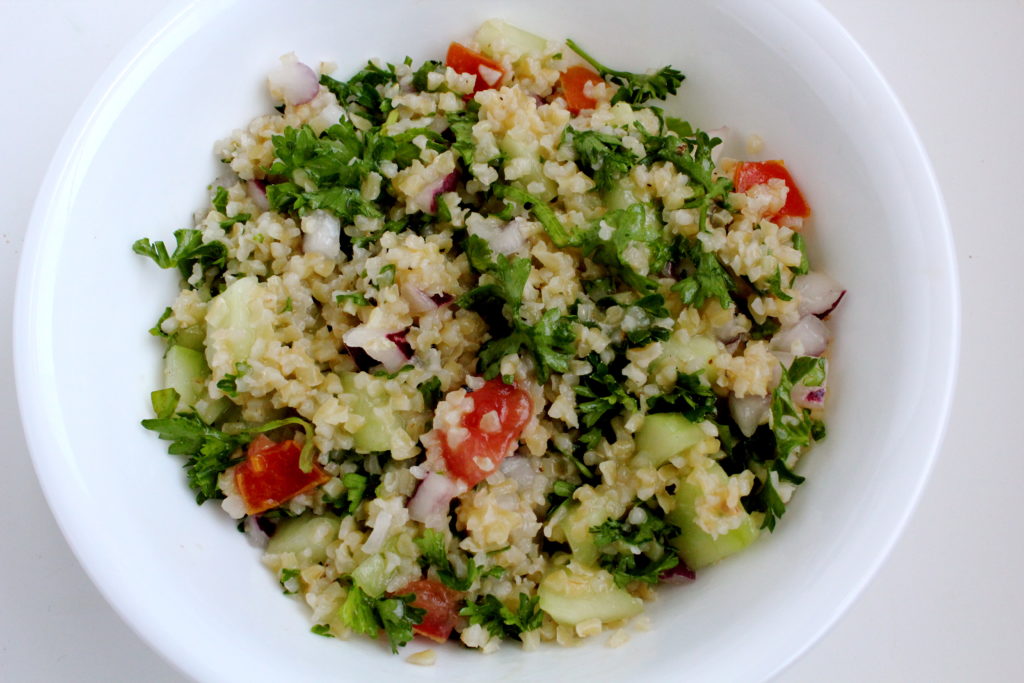
Hi, my name is Amy, and I like butter. There, I said it. Jewish food is not always known for being light, what with all the schmaltz and brisket and rugelach, and I am not here to apologize for any of it. But every so often, even I need a break. That is when I reach for tabouli.
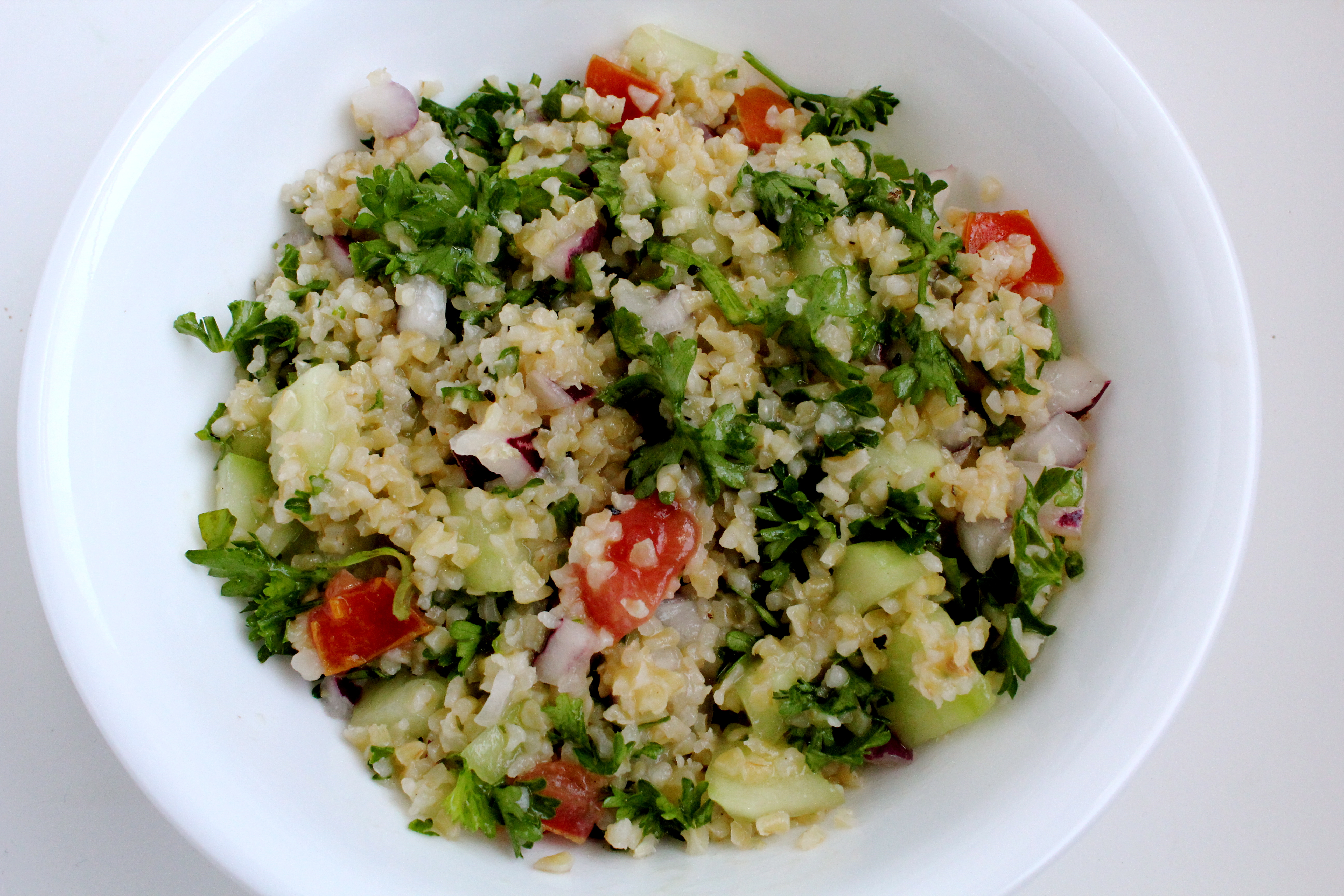
Tabouli is a bright, herby, lemony Middle Eastern salad built on fresh parsley and bulgur wheat. It is genuinely good for you, it comes together with almost no cooking, and it is so tasty you will not even register that it is healthy.
What is tabouli?
Tabouli is a Levantine herb salad with roots in the mountains of Lebanon and Syria. At its core it is finely chopped fresh parsley, bulgur wheat, tomato, mint, scallion, lemon juice, and olive oil. Some versions add cucumber.
The key thing to understand is that tabouli is, first and foremost, a parsley salad. The herbs are not a garnish here. They are the main event, with the bulgur playing a supporting role. It is traditionally one part of a mezze spread, the array of small dishes served across the Middle East, and it has become popular far beyond the region as a fresh, healthy side.
Tabouli matters culturally, too. It is considered a national dish of Lebanon, where it is a real point of pride and even has its own day on the calendar. The more you know!
Tabouli vs tabbouleh
You will see this dish spelled what feels like a dozen different ways: tabouli, tabbouleh, tabbouli, tabouleh, tabuli. They are all the same salad.
The reason is transliteration. The name comes from an Arabic word, and there is no single official way to spell an Arabic word in English letters. “Tabbouleh” is the spelling closest to the Arabic and the one you will see in Lebanese cookbooks. “Tabouli” is the spelling that caught on in American grocery stores and on American menus. I use tabouli here because that is what most people in the States search for and say, but if you grew up calling it tabbouleh, you are not wrong. Nobody is.
Lebanese vs Israeli vs American tabouli
Tabouli changes depending on where it is made.
Lebanese tabouli is the original and the most parsley-forward. It is overwhelmingly herbs, with just a small amount of fine bulgur worked through, so it barely looks like it has any grain in it at all.
Israeli and broader Middle Eastern versions evolved as people moved around the region. They similar, herb-heavy and fresh, sometimes with a little more vegetable in the mix.
American tabouli is where things drift. The version most Americans know, often from a deli container or a boxed mix, uses far more bulgur and more chopped cucumber and tomato, so it reads like a grain salad rather than an herb salad. None of these are wrong, but they are noticeably different dishes. This recipe lands in friendly middle ground: plenty of parsley, with enough bulgur and vegetables to feel substantial.
Tabouli ingredients
Here is what goes into a good tabouli. Exact amounts are in the recipe card below.
- Flat-leaf parsley. The star of the dish. Flat-leaf, also sold as Italian parsley, has more flavor than curly, and you need a lot of it.
- Bulgur wheat. Fine or medium bulgur, soaked until tender. It is parcooked cracked wheat, so it needs soaking, not boiling.
- Tomato. Ripe and firm, seeded so it does not water down the salad.
- Cucumber. Not strictly traditional in Lebanese tabouli, but common in American versions and good for crunch.
- Fresh mint. A smaller amount than the parsley, but it matters.
- Scallions or onion, finely chopped, for a gentle bite.
- Lemon juice, olive oil, salt, and pepper for the dressing.
Ingredient substitutions
- Gluten-free: swap the bulgur for cooked quinoa. It is not traditional, but it makes a great gluten-free tabouli with a similar texture.
- No fresh mint: you can leave it out, though you will miss it. Do not reach for dried.
- Bulgur grind: fine bulgur is most traditional. Medium works and gives more chew. Coarse bulgur is too hearty here.
How to make tabouli
Here is the whole process. The full recipe with measurements is in the card below.
Step 1: Soak the bulgur
Pour boiling water over the bulgur and let it sit for about 30 minutes, until the grains are tender and the water is absorbed. Fluff it, let any extra moisture steam off, and drain off any water that has not soaked in so the finished salad is not soggy. Bulgur is parcooked, so it only needs to rehydrate, not boil.
Step 2: Chop everything small
Finely chop the parsley, mint, scallions, tomato, and cucumber. Small, even pieces are the whole game with tabouli. The parsley especially should be chopped fine, and dried well first so it does not bruise. A sharp knife beats a food processor here, since the processor tends to turn delicate parsley to mush.
Step 3: Make the dressing
Whisk together the olive oil, fresh lemon juice, salt, and pepper. Tabouli should taste bright and lemony, so do not be shy with the lemon. Some cooks add a small pinch of ground allspice or cinnamon, a quiet nod to the Levantine original.
Step 4: Combine and chill
Toss the bulgur, herbs, and vegetables together, pour over the dressing, and mix well. Chill for at least an hour so the bulgur soaks up the flavors. Taste once it has chilled and adjust the lemon and salt, since the bulgur drinks both up as it sits. Serve cold or at room temperature.
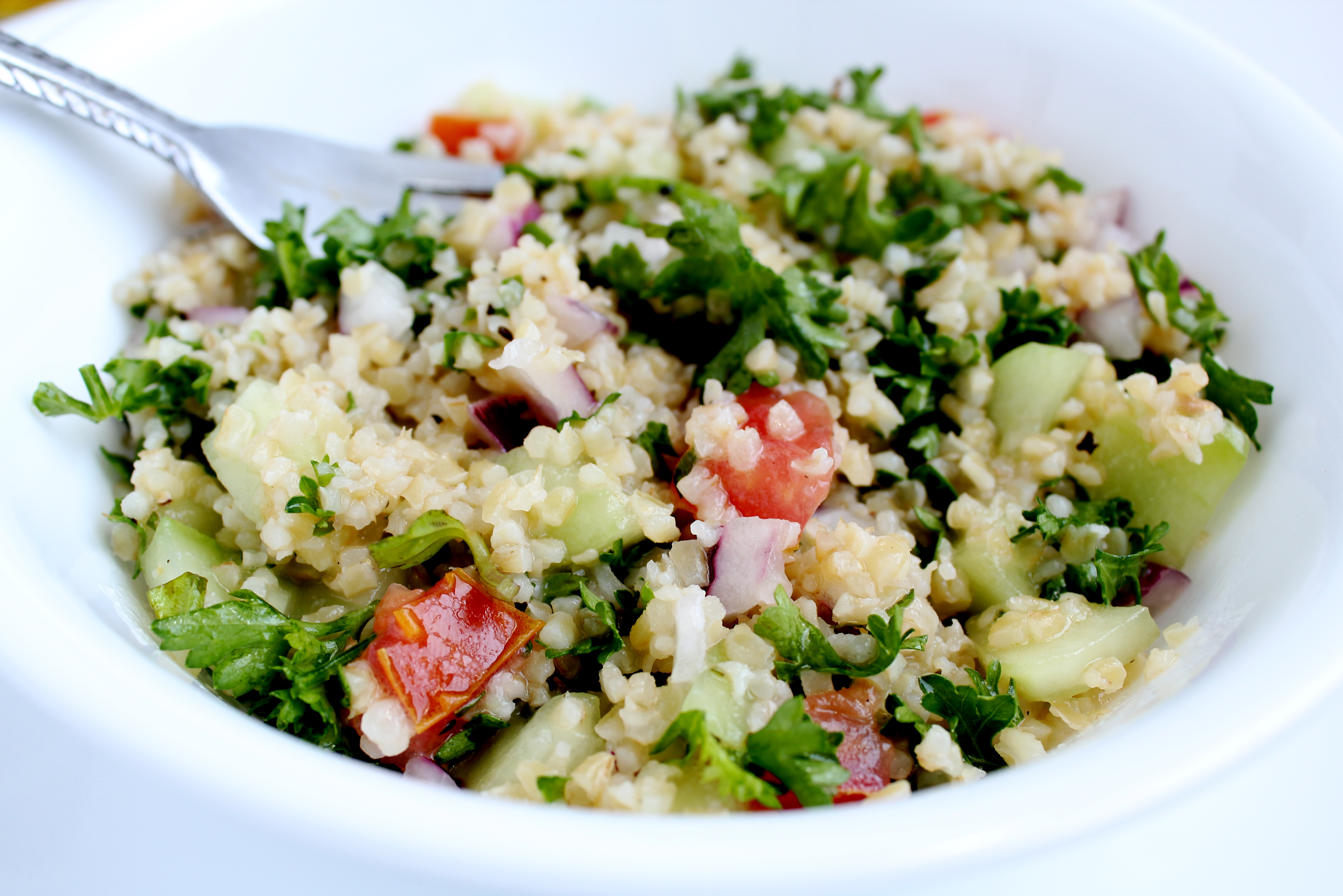
Tips for the best tabouli
- Chop the parsley fine, and dry it well first. Wet parsley bruises and turns the salad soggy.
- Seed the tomatoes. Tomato juice waters down the dressing and leaves the salad sitting in a puddle.
- Go heavy on the herbs. Tabouli should look green, not beige. If it looks like a bulgur salad with parsley in it, add more parsley.
- Do not skimp on lemon. Brightness is the point.
- Let it rest. An hour in the fridge lets the bulgur absorb the dressing and the flavors come together.
- Taste and re-season before serving. Bulgur soaks up salt and lemon as it sits, so it often needs a top-up.
- Use the freshest parsley you can find. Limp, yellowing parsley makes a limp, dull salad.
- Mix it a few hours ahead, but if you want maximum crunch, stir the tomato and cucumber in closer to serving.
What to serve with tabouli
Tabouli is a natural part of a mezze spread. Set it out with hummus, baba ganoush, and warm pita and you have an easy, generous appetizer table. It is also a fresh counterpoint to grilled and rich foods:
- Alongside grilled meats like lamb kofta kebabs.
- With falafel, for a classic pairing.
- Scooped up with warm homemade pita.
- As a light side to grilled chicken or fish.
Add a handful of chickpeas and tabouli becomes a vegetarian main all on its own.
How to store tabouli
Tabouli keeps well, which makes it a great make-ahead dish. Store it in an airtight container in the fridge for up to 3 days. It is actually best a few hours after it is made, once the bulgur has soaked up the dressing.
After about three days the herbs start to wilt and lose their brightness, so it is a salad to enjoy fresh-ish. It does not freeze well, since the fresh vegetables and herbs turn watery, so make only as much as you will eat within a few days.
Tabouli FAQ
Is tabouli healthy?
Yes, genuinely. It is mostly fresh herbs and vegetables with a modest amount of whole-grain bulgur, dressed in olive oil and lemon. It is light, high in fiber, and full of nutrients.
Is tabouli vegan?
Yes. Traditional tabouli has no animal products at all, just vegetables, herbs, bulgur, olive oil, and lemon. It is naturally vegan and dairy-free.
Is tabouli gluten-free?
Not traditionally, because bulgur is a wheat product. For a gluten-free version, swap the bulgur for cooked quinoa. It is not authentic, but it works well.
Can you make tabouli ahead of time?
Yes. Tabouli is better after an hour or two in the fridge, and it holds for about 3 days. It is a great make-ahead salad for parties and barbecues.
What is the difference between tabouli and tabbouleh?
Nothing. They are two spellings of the same dish, transliterated from Arabic. “Tabbouleh” is closer to the original, and “tabouli” is the common American spelling.
Is tabouli served hot or cold?
Cold or at room temperature, never hot. It is a refreshing salad, at its best chilled.
What does tabouli taste like?
Bright, fresh, and herbaceous, with a strong parsley backbone, a lift of mint, tang from lemon, and a little sweetness from ripe tomato. It is light and zingy rather than rich or heavy.
Can you make tabouli without bulgur?
You can. Use cooked quinoa for a gluten-free version, or cauliflower rice for a low-carb one. Purists will tell you it is then not quite tabouli, and they have a point, but both make a tasty parsley salad.
Make a big bowl, set it out with pita and hummus, and enjoy the rare Jewish-table moment of eating something genuinely good for you.

Tabouli Salad
Ingredients
- 1 cup bulgur wheat
- 2 cups boiling water
- 1 cucumber peeled and seeded
- 1/2 red onion
- 1 plum tomato
- 1/2 cup olive oil
- 1 lemon juiced
- 1 cup parsley
- 6 scallions
- 1/4 cup fresh mint
- Salt and pepper to taste
Instructions
- Boil water and pour over bulgur wheat. Let soak for 30 minutes or until all the water is absorbed.
- Chop cucumber, onion and tomato into small pieces and add to the bulgur wheat.
- Chop up parsley, scallions and mint and add to bulgur and veggie mix.
- In a separate bowl, mix olive oil, juice from lemon, salt and pepper and then add to the bulgar mix.
- Chill in the refrigerator for an hour, and serve chilled or at room temperature.
More Mediterranean recipes


10 Comments
Another winner my precious!! Your recipes used to make my mouth water, now I am just drooling!!!!!! Keep ’em coming! Yeehaw!!!
Bubbe
Thanks, Bubbe! I’ll get you a rag.
Pretty indeed! How long will you be in culinary school? Maybe we’ll see you on the Food Network Channel in Chopped (hopefully you won’t be chopped!)?
Thanks! The program is a year long. I am aiming for Next Food Network Star! They need some Jews in front of the camera.
I just LOVE your site and recipes Amy; I have pinned your pumpkin hummus, homemade lox and gefilte fish recipes on Pinterest. Your recipes for tabbouleh looks good, I would only ADD that you use SEA SALT; it makes ALL the difference and I find that ENGLISH cucumber works out very nicely. I love my tabbouleh…thanks for sharing your recipes…
Thanks, Denise! Great tips with the sea salt and English cucumbers!
[…] Tabouli Salad […]
[…] Tabouli Salad […]
Your recipe is almost identical to the way I’ve made it all my life, save that I usually soak the bulger at room temp in cold, salty water, overnight… and also add fresh, chopped mint. Which tomatoes, cukes, and onions are up for grabs (depending on availabilty), but my family tends to prefer fragrant, multi-coloured grape tomatoes, English cucumber, and sweet onions.
My adult son ate a whole 2# container in one day’s sitting, so I also make large enough quantities to ensure that I get some finished product, in addition to that consumed while adjusting seasonings.
L’shana Tovah!
Amazing! Does the soaking make a difference? I haven’t made this recipe in too long, will be making soon!