
The Best Shakshuka Recipe

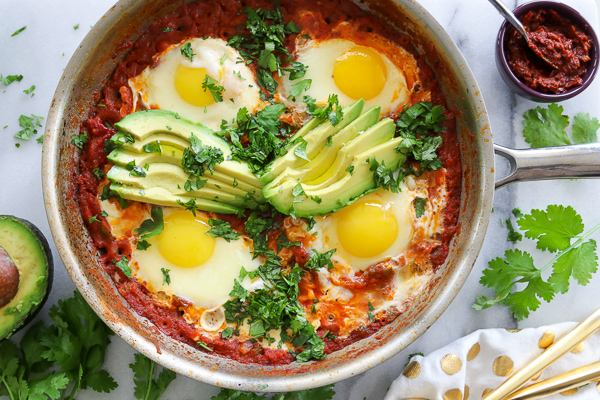
This is hands-down the best shakshuka recipe! All my shakshuka tips and secrets, plus how to make shakshuka for one.
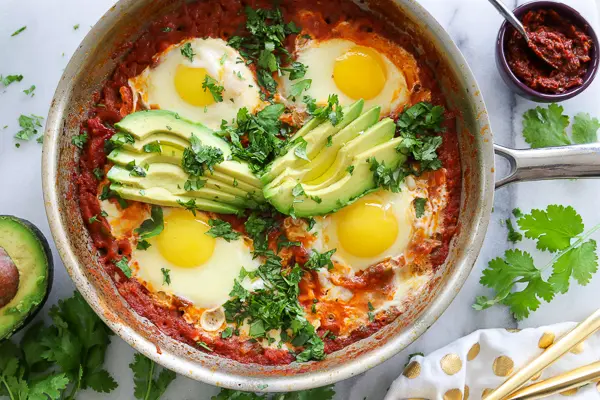

This one is for you! Yes, you. Even though I have made lots of unique twists on shakshuka — from green shakshuka to shakshuka puttanesca — I get requests for classic shakshuka almost weekly! So I finally wrote out the recipe for y’all. Maybe it’s bold to call this the best shakshuka recipe, but I’ve made shakshuka a LOT and tried tons of different variations. Here are all my secrets so you too can make the best shakshuka recipe ever.
Some tips for shakshuka gold: use good quality ingredients all around. Especially the tomatoes — I prefer fire-roasted for extra flavor. Don’t skip the tomato paste — it adds even more depth. Add some sort of heat element — I love harissa but jalapeños or chili pepper flakes work great too. Be patient with the eggs as they take a bit of time to cook, but keep an eye on them so you don’t overcook them! No one wants hard yolks… unless you do, in which case, cook them longer.
What is Shakshuka?
Shakshuka (also spelled shakshouka) is eggs poached in a spiced tomato and bell pepper sauce. It comes together in one pan in about 30 minutes, it’s naturally vegetarian and gluten-free, and it works for breakfast, brunch, lunch, or dinner. It’s also one of the most forgiving recipes I know — mess with the spice level, throw in some feta, add more vegetables. Hard to get wrong.
The name comes from the Arabic word for “a mixture” or “all mixed up,” which is honestly a perfect description. Some dialects use it as slang for something jumbled together. Either way: eggs, sauce, pan, done.
Shakshuka Origins: Israeli, Tunisian and North African
Ask ten people where shakshuka is from and you’ll get ten different answers. It’s deeply associated with Israeli cuisine — a fixture of Shabbat brunch, Tel Aviv cafés, and Jewish kitchens across the Middle East. But the roots are in North Africa, specifically Tunisia and Libya, where spiced tomato sauces with eggs have been cooked for centuries.
Sephardic and Mizrahi Jewish families brought shakshuka to Israel when they immigrated throughout the 20th century, and it took hold fast. Today it’s practically the Israeli national breakfast. It’s also all over brunch menus from New York to London — which is fair, because it deserves to be.
What Makes the Best Shakshuka?
I’ve made shakshuka more times than I can count, and I’ve figured out what actually makes a difference. It’s not complicated, but a few things matter a lot.
Start with great tomatoes
This is the most important ingredient. I use fire-roasted canned tomatoes for their smoky depth. Italian tomatoes are my all-time favorite — something about the sea and the sun makes them taste genuinely better. And please: no sugar. If your tomatoes taste too acidic, get better tomatoes. I apply the same rule to my homemade tomato sauce.
Use a cast iron skillet
Cast iron holds heat evenly and gives you beautiful caramelization on the vegetables. It also keeps the sauce hot longer, which matters when the eggs are going in. No cast iron? Wide stainless or non-stick works fine — just avoid anything too small. Each egg needs its own space.
Poach the eggs on the stovetop
I know some recipes finish shakshuka in the oven. I disagree with this. In the oven, the egg whites spread over the yolks (aesthetically a disaster), and you can’t watch what’s happening. On the stovetop, you can see exactly when the whites set and the yolks are still jammy. Cover with a lid to trap steam. Once the whites look opaque, you have maybe 60 seconds before the yolks firm up — so stay close.
Build flavor in layers
Don’t rush the sauce. Get real color on your onions and peppers before the tomatoes go in — those golden bits are flavor you cannot add back later. Tomato paste is required. And harissa (or cumin, smoked paprika, and cayenne) is what gives shakshuka its warmth. Season as you go, taste before the eggs, and adjust.
View this post on Instagram
Shakshuka Ingredients and Substitutions
Here’s what goes in:
- Eggs — 4 to 6 large eggs. Not much wiggle room here, it’s literally the dish.
- Canned tomatoes — fire-roasted crushed tomatoes are my pick. Whole peeled works too; just crush them by hand first.
- Bell peppers — red, orange, or yellow for sweetness. Green works but runs bitter.
- Onion — yellow or white. Red adds a bit of extra sweetness.
- Garlic — fresh cloves. No jarred stuff.
- Tomato paste — don’t skip it. Adds concentrated richness that canned tomatoes alone won’t give you.
- Harissa — my secret weapon. No harissa? A pinch of cayenne plus extra smoked paprika gets you close. Jalapeños work great too!
- Spices — cumin, smoked paprika, chili flakes.
- Olive oil — for sautéing and finishing.
- Fresh herbs — cilantro or flat-leaf parsley. Avocado on top is optional but I strongly recommend it.
How to Make the Best Shakshuka (Step-by-Step)

Step 1: Caramelize the vegetables
Heat a generous pour of olive oil in a large cast iron skillet over medium heat. Add diced onion and bell peppers. Cook, stirring occasionally, until softened and starting to turn golden — about 8 to 10 minutes. Don’t rush this. Add minced garlic and cook another 30 seconds.

Step 2: Build the sauce
Add tomato paste and stir it into the vegetables. Cook for 2 minutes — it’ll darken slightly and smell amazing. Add cumin, smoked paprika, harissa, and chili flakes. Pour in the canned tomatoes, season generously with salt, and let the sauce simmer 10 to 15 minutes until it thickens and deepens in color. Taste and adjust.

Step 3: Add the eggs
Use a spoon to make small wells in the sauce — one per egg. Crack an egg into each well. Season lightly with salt and pepper. Cover the pan and reduce to medium-low. Cook 5 to 8 minutes until the whites are set and the yolks are still runny. Check constantly. The difference between perfect and overcooked is under a minute.

Step 4: Garnish and serve
Off the heat. Top with fresh cilantro (or parsley), a drizzle of olive oil, and crumbled feta if you want to go there. Avocado never hurts. Serve straight from the pan with something to dip.

This is technically a recipe for two, but I could eat the whole pan myself. To make shakshuka for one: halve everything and use a smaller skillet. Or make the full sauce, add just two eggs, and reheat the rest of the sauce tomorrow with two more eggs. Because shakshuka two days in a row is not a problem.

Shakshuka Variations to Try
Classic shakshuka is perfect, but it’s also a canvas. A few directions I love:
- Green Shakshuka — tomatillo and spinach sauce instead of tomato. Bright and punchy.
- Shakshuka Puttanesca — olives, capers, and anchovies for a briny Italian spin.
- Lamb Shakshuka — brown ground lamb with the vegetables first. So good.
- Green Bean Shakshuka — hearty and veggie-packed. Great for summer.
- Caprese Shakshuka Breakfast Casserole — a baked version with fresh mozzarella and basil.
- Feta Shakshuka — crumble feta generously on top before serving. It melts slightly into the sauce and the result is dreamy.
- Vegan Shakshuka — chickpeas or white beans instead of eggs. Still filling, still great.
- Shakshuka with Chorizo — brown merguez or beef chorizo with the onions. (Beef or turkey chorizo to keep it kosher!)
What to Serve With Shakshuka
You need something for dipping. This is not optional.
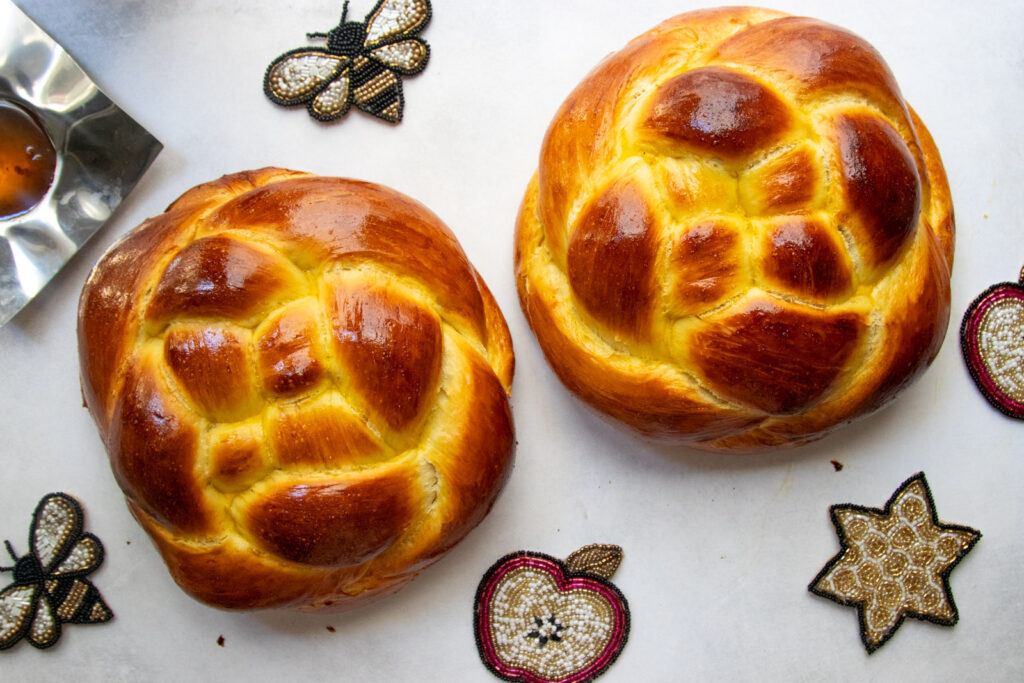
- Challah — thick slices for scooping up every drop. My number one choice.
- Crusty baguette or sourdough — toasted is better. You want something that holds up.
- Warm pita — tear off pieces and scoop straight from the pan. Classic Israeli style.
- Za’atar pita — really good if you want to lean into the Middle Eastern thing.
- Hummus — a scoop on the side works beautifully.
- Greek yogurt or labneh — cool and creamy, either on the side or dolloped right on top.
- Simple Israeli salad — diced cucumbers and tomatoes to keep things bright.
Shakshuka is one of my favorite breakfasts and also — I’ll say it — an excellent hangover cure. It doubles as a great weeknight dinner when you need something fast.
Common Shakshuka Mistakes to Avoid
- Overcooking the eggs — the #1 issue. Low heat, lid on, constant attention. Runny yolks are the whole point.
- Under-seasoning the sauce — taste before the eggs go in. Adjust salt, spice, and acid (a splash of lemon juice helps). The sauce should taste bold on its own.
- Rushing the vegetables — if your onions and peppers aren’t caramelized, your sauce will be flat. That step is the foundation.
- Adding sugar — don’t. Get better tomatoes.
- Too small a pan — eggs need space. 10 to 12 inches minimum for four eggs.
- Finishing in the oven — the whites spread over the yolks and overcook. Stovetop with a lid is better, every time.
How to Store and Reheat Shakshuka
The sauce keeps great in the fridge for up to 4 days, or freeze it for up to 3 months. The eggs, not so much — if you’re making this ahead, stop before you add them. Reheat the sauce in a skillet, then poach fresh eggs when you’re ready to eat. Same result, no sad rubbery egg situation.
If you do have leftover shakshuka with eggs, it’ll keep 1 to 2 days. Reheat it gently on the stovetop, covered, on low. Skip the microwave.

The Best Shakshuka Recipe
Ingredients
- 2 tablespoons extra virgin olive oil
- 1/2 large white onion diced
- 1/2 large green pepper diced
- 3 garlic cloves with center germ removed, diced
- Kosher salt
- 2 tablespoons tomato paste
- 1 tablespoon harissa
- 1 teaspoon cumin
- 1 teaspoon paprika
- 1/2 teaspoon red chili pepper flakes optional
- 28 oz fire roasted diced tomatoes fresh tomatoes work great too!
- Fresh cracked black pepper
- 4 large eggs
- Cilantro and avocado for garnish
Instructions
- In a large 12-oz sauté pan, heat oil over medium heat. Add onions and pepper and a pinch of salt and saute for 5 minutes, stirring occasionally, until veggies and soft and slightly browned.
- Add garlic and cook for one more minute until fragrant (add a little more olive oil if needed.)
- Then add the tomato paste, harissa, cumin, paprika and chili pepper flakes and sauté for 3 minutes, stirring occasionally, or until tomato paste brows.
- Add diced tomatoes and combine, and simmer for 5-8 minutes until sauce thickens.
- Season to taste with salt and pepper.
- Put one egg in a small ramekin and dig a small well with a spoon in the shakshuka for the egg to go in. Repeat with the other eggs. Simmer over medium for 10 minutes or until the whites are cooked but the yolks are still runny. Serve immediately with cilantro, avocado and a drizzle of olive oil!

Shakshuka FAQ
Is shakshuka vegetarian?
Yes — naturally vegetarian and gluten-free. Sub chickpeas or white beans for the eggs to make it vegan.
Can I make shakshuka ahead of time?
Make the sauce up to 4 days ahead and keep it in the fridge. Poach the eggs fresh when you’re ready.
What does shakshuka mean?
It’s from Arabic, meaning “a mixture” or “all shaken up.” Some dialects use it as slang for something jumbled — a fitting name for eggs tumbling around in tomato sauce.
Can I use fresh tomatoes?
Yes! About 2 pounds of ripe tomatoes, roughly chopped. Fresh tomatoes need more time to concentrate, so simmer longer. Canned fire-roasted tomatoes give the most consistent result year-round, which is why I always keep them in my pantry.
Is shakshuka Israeli or Tunisian?
Both. North African roots (Tunisia, Libya, Morocco), brought to Israel by Sephardic and Mizrahi Jewish families. Now it’s everywhere, and it belongs everywhere.
What can I use instead of harissa?
Smoked paprika, cumin, and cayenne together will get you in the ballpark. Or make your own — my harissa recipe is dead simple and keeps in the fridge for weeks.
Can shakshuka be made in a slow cooker?
The sauce, yes. The eggs need the stovetop or oven at the end so they don’t turn to rubber. Honestly the stovetop is faster for this one.
More shakshuka and brunch recipes


5 Comments
every shakshuka recipe ends with “serve immediately”…my eternal question (as someone who did not grow up with jewish or israeli foods – other than falafel) is, should shakshuka be served over or on something?? bread, potatoes, rice?? or just scooped out onto a plate, or bowl?
Yes because you don’t want it to get cold or have to reheat the eggs so they overcook! As I said, crusty bread is traditional or challah or pita, but I just like a spoon!
I am over the top with your recipes. I have not had this food since I was in my early 20’s I have found my passion for the winter your site. Thank you thank yo
I love that it is so healthy
Thank you so much!
[…] The Best Shakshuka from What Jew Wanna Eat […]