
The 20 Best Jewish Main Dishes

Jewish main dishes are wildly varied. There’s the brisket you (I) grew up with, the shakshuka you started making on Sunday mornings, and the chicken shawarma that proved you could pull off Israeli cooking at home without a vertical spit. This list spans all of it: Ashkenazi classics, Sephardic staples, Israeli street food, and vegetarian mains that hold their own against the meat dishes. Whether you’re cooking for Rosh Hashanah or just Tuesday, something here has your name on it.

The big three
If you only cook three recipes from this list, make it these. Every Jewish cook, whether they grew up with a Bubbe ladling soup on Friday nights or just fell in love with deli food should make these.
The best Jewish brisket
The one everyone’s grandmother made, the one nobody can agree on (my Bubbe’s is the best!), the one I keep coming back to every single Rosh Hashanah. Low and slow in a Dutch oven until the meat practically dissolves (but not quite). This is the recipe to have. Get the recipe.
Matzah ball soup

Penicillin in bowl form. Sinkers or floaters, you know which side you’re on and I’m not here to change your mind (team floater!). The homemade broth is everything, and this version doesn’t skip a thing. Get the recipe.
Chicken schnitzel
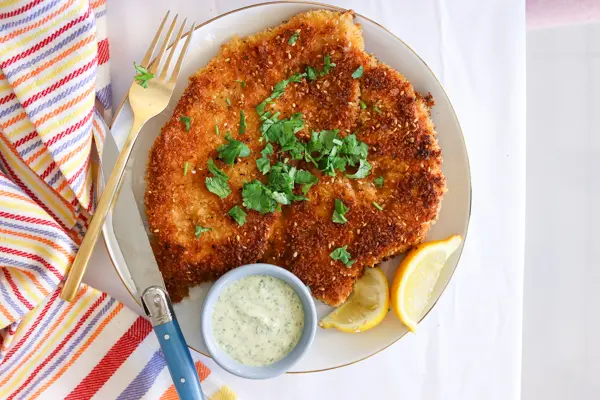
Israeli street food meets the Eastern European schnitzel tradition. Always crispy, my version shawarma-spiced, and served with a green dill tahini that you’ll want to put on everything. Get the recipe.
Fish
Fish is traditionally served as its own course on Shabbat and at holiday meals. A good roasted salmon earns its place on this list.
Sumac roasted salmon with almond gremolata and horseradish cream
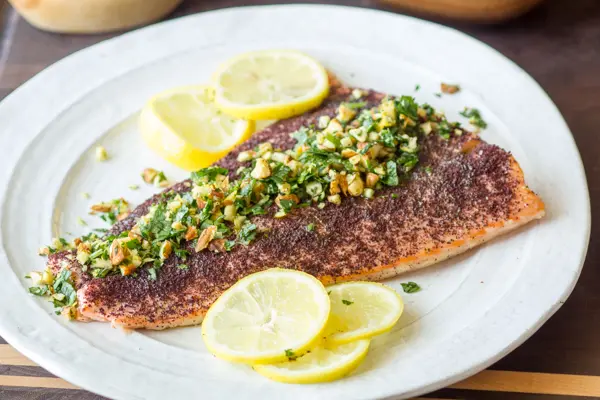
Salmon roasted with sumac, topped with an almond gremolata and a horseradish cream. Fast enough for a weeknight, fancy enough for Shabbat. Get the recipe.
Holiday mains
For Rosh Hashanah, Shabbat, Passover, or Sukkot these are the dishes that make a Jewish holiday table feel like a Jewish holiday table. Most require some time, all are completely worth it.
Za’atar roasted chicken over sumac potatoes

Za’atar and lemon on a whole chicken, roasted on a bed of sumac potatoes until everything is golden and the potatoes have soaked up all the pan juices. This one pan dish from Adeena Sussman is easy and impressive. Get the recipe.
Roasted Shabbat chicken with spring vegetables

The Friday night chicken. Crispy skin, tender meat, vegetables soft enough to eat with a spoon. This is the recipe I make every time I want dinner to feel like an occasion. Get the recipe.
Pomegranate brisket with avocado cilantro aioli
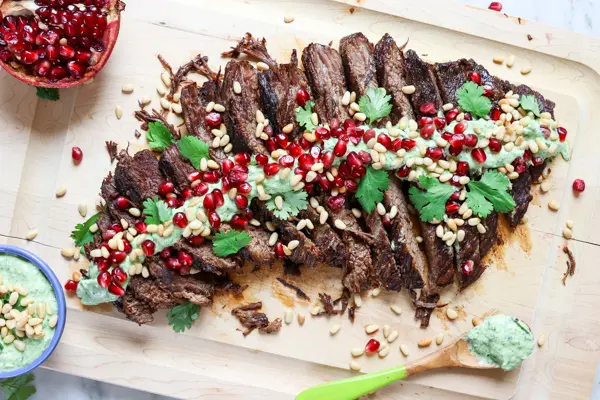
Brisket braised in pomegranate juice and red wine, finished with an avocado cilantro aioli that sounds weird and tastes incredible. The holiday upgrade. Get the recipe.
Cholent

The Shabbat stew that cooks overnight. Beef, beans, barley, potatoes are all slow-cooked until impossibly tender and deeply savory. It smells like tradition. Get the recipe.
Stuffed cabbage rolls with white wine sauce
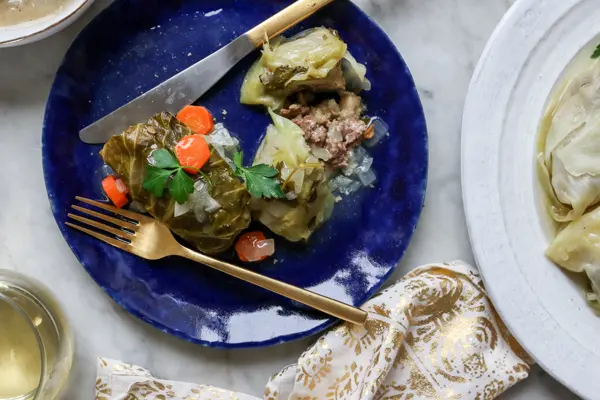
Cabbage leaves stuffed with seasoned beef and rice, braised low and slow in a white wine tomato sauce. Not a quick weeknight dinner but a project worth making. Get the recipe.
Weeknight dinners
Shabbat-worthy flavor without the all-day commitment. These are the recipes I reach for when I want something genuinely good on the table without clearing my whole afternoon.
White wine, honey and fig chicken
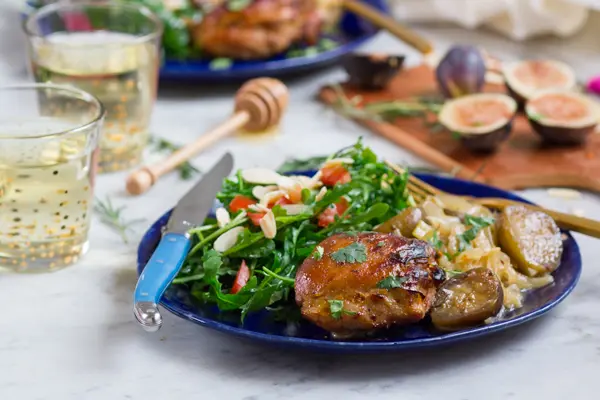
Chicken thighs braised with white wine, honey, and figs until the sauce reduces into something sticky and deeply sweet. Shabbat-worthy on a Tuesday. Get the recipe.
Slow cooker Moroccan meatballs

Lamb and beef meatballs in a spiced tomato sauce with harissa and preserved lemon, made in the slow cooker. The smell when you come home is worth making this recipe for alone. Get the recipe.
Harissa chicken tacos
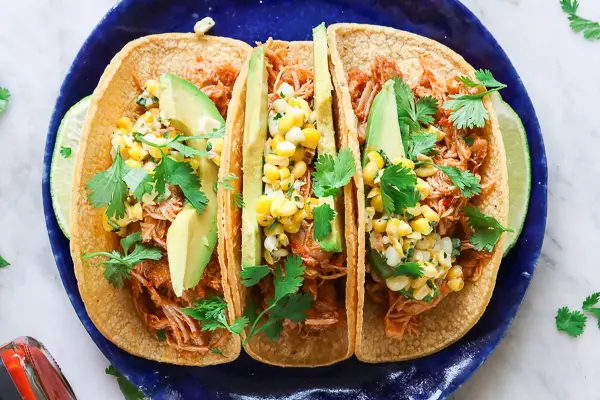
Jewish-ish Taco Tuesday. Harissa-marinated chicken thighs with tahini, pickled onion, and fresh herbs piled into warm tortillas. These go fast. Get the recipe.
Arayes: grilled meat-stuffed pitas

Middle Eastern street food: spiced ground meat packed inside pita and grilled until crispy on the outside and juicy inside. Somehow this became a weeknight staple at my house. Get the recipe.
Vegetarian mains
Kashrut means Jewish cooks have always had strong vegetarian options so these aren’t afterthoughts. They’re the dishes I genuinely choose over the meat version, even when I have the choice.
The best shakshuka
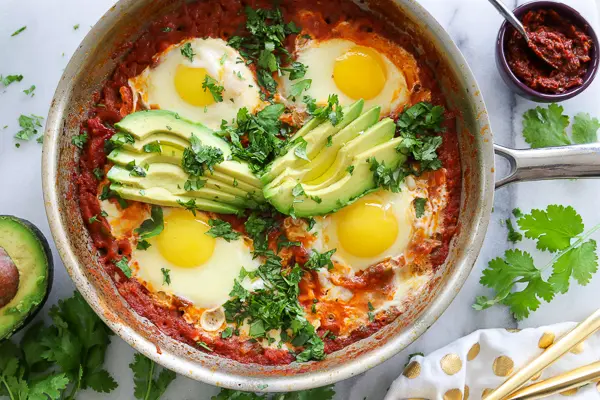
Eggs poached in a spiced tomato sauce, finished with feta and fresh herbs. Brunch, dinner, midnight snack, fourth meal, this goes anywhere, and the title is accurate. Get the recipe.
Eggplant schnitzel with turmeric yogurt sauce
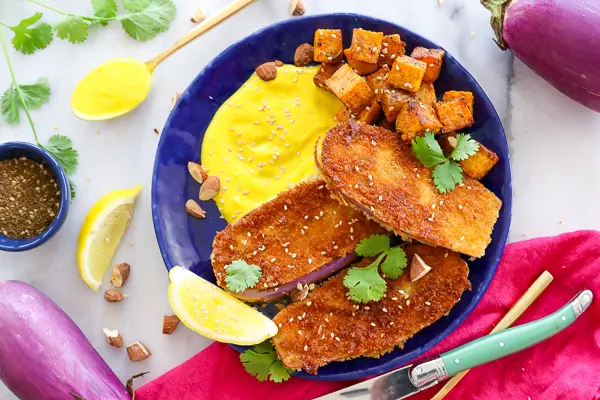
Breaded, pan-fried eggplant served on turmeric yogurt with za’atar roasted sweet potatoes. The meatless main that consistently converts skeptics. Get the recipe.
Roasted shawarma cauliflower steaks with harissa tahini
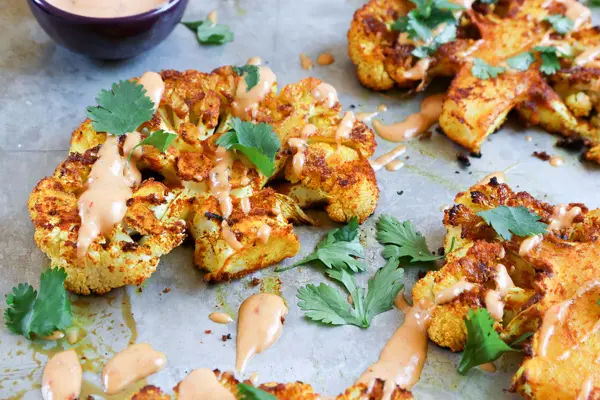
Whole cauliflower sliced into thick steaks, rubbed with shawarma spice blend, and roasted until deeply caramelized. Served with harissa tahini. This is what to serve when someone says vegetarian mains don’t impress them. Get the recipe.
Baked falafel with pumpkin hummus

Crispy baked falafel — not fried, actually crispy — served with a pumpkin hummus (really! but you can use regular hummus too) that makes the whole plate feel like fall. A proper vegetarian main that works for Shabbat or any night of the week. Get the recipe.
Israeli and Mediterranean-Jewish
The Israeli-diaspora overlap: dishes rooted in Middle Eastern and North African tradition, shaped by a Jewish lens. These are where some recipe magic happens!
Lamb kofta kebabs with turmeric tahini sauce

Spiced ground lamb on skewers, grilled and served with a bright turmeric tahini sauce. The grill season recipe I look forward to every summer. Get the recipe.
Chicken shawarma

The real thing, without a vertical spit. The marinade — warm spices, lemon, garlic — does all the work, and it works on the stovetop or grill. Make extra. Get the recipe.
Fried green tomato sabich

The Israeli breakfast sandwich – fried eggplant, egg, tahini, amba – gets a Southern twist with fried green tomatoes instead. Unexpected, completely works. Get the recipe.
Meatball tagine with chickpeas
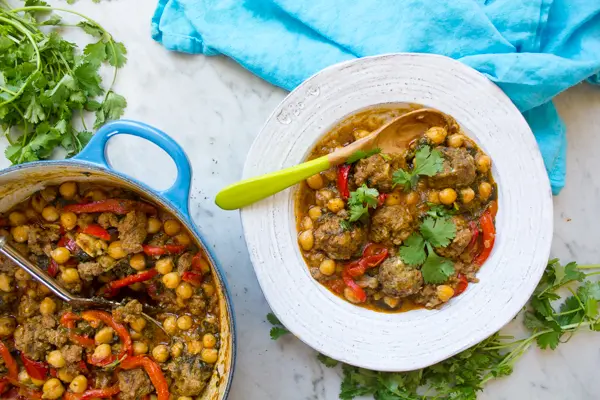
Moroccan-spiced meatballs in a saffron and tomato sauce with chickpeas. North African Jewish cooking at its best — warm, aromatic, and better the next day. Get the recipe.
FAQ
What is a traditional Jewish main dish?
The Ashkenazi classics are brisket, roasted chicken, matzo ball soup, stuffed cabbage, and cholent. Sephardic and Mizrahi traditions bring lamb, meatball tagines, stuffed vegetables, and spiced fish dishes. Israeli cooking adds shakshuka, falafel, and shawarma. There’s no single answer, it depends on where your family came from, but all of it is Jewish food.
What do Jewish people eat for Shabbat dinner?
A traditional Shabbat meal starts with challah, often followed by fish, then chicken soup with matzo balls, then a main of roasted chicken or brisket. In practice it varies enormously by family. Some go full multi-course, some do just a nice roasted chicken. The common thread is that it’s the meal of the week, so it tends to be something worth taking your time on.
What are traditional Rosh Hashanah main dishes?
Rosh Hashanah mains lean into sweet and symbolic ingredients. Honey, pomegranates, apples, round foods that represent the New Year. Brisket is the centerpiece on most Ashkenazi tables. Honey-glazed chicken and pomegranate-braised dishes are popular. Fish is traditional too, since the Hebrew word for fish is associated with abundance and fertility. Good things to hope for in a New Year!
What are good Passover main dishes?
Passover mains have to be chametz-free so no leavened grains, no regular flour as a thickener. That still leaves a lot to work with. Brisket is the traditional Passover centerpiece. Roasted chicken, salmon, and lamb all work. The main things to avoid are wheat-based sauces and anything with pasta or regular breadcrumbs. Potato starch is your Passover thickener.
What is the difference between Ashkenazi, Sephardic, and Mizrahi Jewish food?
Ashkenazi food comes from Eastern and Central European Jewish communities — brisket, matzo ball soup, stuffed cabbage, cholent, kugel, and schnitzel. Sephardic food comes from Jews who were expelled from Spain in 1492 and settled across the Mediterranean. Think lighter dishes, lots of fish, legumes, rice, and olive oil. Mizrahi food comes from Jewish communities in the Middle East and North Africa — Iraq, Iran, Yemen, Egypt, Syria and tends toward heavier spicing, lamb, slow-cooked stews, and Persian-influenced rice dishes. Israeli cuisine pulls from all three, plus fresh Mediterranean produce. This post has all of them.
Are Jewish main dishes hard to make?
Depends on the dish. Brisket and cholent are low-effort once they’re in the pot — they just need time. Shakshuka takes 20 minutes. Stuffed cabbage is a project. Most of what’s in this post is genuinely doable on a weeknight or a relaxed weekend without any special equipment. The holiday dishes take longer, but that’s sort of the point.